
Shopping for a spa pool is incredibly exciting. This is an investment that can deliver a wealth of benefits, enhancing your property, lifestyle, personal relationships, and health and wellness.
Outdoor spa prices in New Zealand vary widely, which is why two similar-looking spas can carry very different price tags. The gap comes down to two things: features and functionality, and build quality. A cheap spa can look like a bargain but cost far more over its life through power bills, upkeep and early replacement, while a premium, well-insulated spa tends to pay back its higher upfront price.
Why the difference? And which spa truly represents better value? In this guide we’ll look to answer those questions and more.
Understanding spa pool pricing
A spa pool is about as far from an everyday purchase as you can get, and many owners will only need to go shopping for a machine maybe once or twice in their lives (if they choose wisely that is!)
What’s more, spa pools are truly unique machines that feature technologies that most consumers will have never dealt with before, such as heaters, jets, pumps and water care systems.
This makes understanding spa pool pricing a particularly tricky task. And when you’re offered two similar looking spas, with one being just a fraction of the price of the other, the confusion only deepens.
The first thing to understand about spa pool pricing is that little insight can be gained by simply looking at a spa. Sure, high-end models will generally look better than those at the entry-level, but the untrained eye will still see two spas that look largely the same: a cabinet, a shell, and a certain number of seats lined with jets. Most of the value lies beyond the superficial.
The second thing to understand is that a spa pool shouldn’t be thought of as a cost, but rather an investment. By choosing the right model, you’ll enhance and add value to your property, your lifestyle, your relationships and your health. The more you put in, the more you’ll get out of your purchase.
But back to the question at hand.
Why are spa prices so different?
Two main factors drive the gap: features and functionality, and build quality. A higher price usually reflects better technology, insulation, materials and after-sales support, all of which shape your long-term cost.
Features and functionality
The levels of technology and innovation differ significantly between entry-level and premium spa pools. The price of a spa is generally reflective of the level of soaking experience, energy efficiency and upkeep a buyer can expect. Factors include:
- The number and sophistication of spa pool features.
- The water care system.
- Proprietary technologies (which demand significant R&D investment).
Build quality
How long will a spa pool last? The answer to that question will be governed, to a large degree, by price. The more you’re willing to invest in a spa pool, the higher the quality of the materials, the technology and the build, and the longer it will last. Factors include:
- The beauty and design quality of the spa.
- The materials and construction methods used.
- Where the spa is made.
- The level of warranty and after-sales service and support offered.
- Brand reputation (if a brand has been selling spas for several decades, you know you can trust them.)
By comparing the factors above, you’ll begin to get a better sense of why one model might be priced so differently from another, and which is the right choice for you. In general, the cheaper the spa, the lower the quality of the soaking experience.
More surprisingly, the spa with the lower sticker price usually prove to be far more expensive in the long run…
Key takeaways
- Two factors drive price: features and functionality, and build quality.
- A higher price usually reflects better insulation, materials, technology and support.
- You cannot judge a spa's real value by looking at it; most of the value is beneath the surface.
Why is the cheapest spa often the most expensive?
It sounds like a contradiction, but the cheapest spa on the showroom floor often ends up being the most expensive one you could buy. That's because a low sticker price usually means cheaper materials, weaker insulation and less technology, all of which drive up your power bills, upkeep and the odds of an early replacement. The real cost reveals itself over the years, not on the day you pay.
The cheaper spa:
- Features lower build quality, having been made with cheaper materials and parts, so will be prone to breakdowns and is unlikely to last particularly long.
- Is less energy efficient, leading to high power bills.
- Lacks technology that automates upkeep, so demands a significant amount of maintenance from its owner.
- Depreciates quickly due to all the factors above, meaning a low resale value.
The more expensive spa:
- Is built by highly trained professionals using quality parts and materials – it won’t be prone to breakdowns and is built to last.
- Has high-end insulation that keeps more heat in, significantly lowering power bills.
- Is fitted with automated water care systems that demand less work and chemicals than cheaper equivalents.
- Retains its value for all the reasons above, resulting in a higher resale value if you choose to sell or upgrade.
If you choose the cheaper spa, any upfront savings that you might enjoy at the beginning tend to be eroded over time. When properly maintained, premium models will last years if not decades, over which time you may have to buy multiple entry-level machines. And in the face of high power bills, you may be hesitant to enjoy your entry-level model as much as you’d like to.
A spa pool is an investment, and you need to make sure yours is a good one.
Key takeaways
- Upfront savings on a cheap spa are usually eroded by higher power and upkeep bills.
- A premium spa can last years or decades, outlasting several cheaper machines.
- A quality spa holds its value, giving you far better resale if you upgrade.
Is a used outdoor spa worth buying?
A used outdoor spa can be worth it if you inspect carefully, but a private sale comes with no warranty or support, so a refurbished Hot Spring from a dealer is the safer way to save.
A second-hand spa can look like the smart, budget-savvy choice. The price is a fraction of a new model, someone else has absorbed the initial depreciation, and you might just land a quality machine for less. For a deal-conscious Kiwi, the appeal is obvious.
The trouble is, buying used can quietly shift a lot of risk onto you. In most private sales you lose the warranty, the dealer support and any real guarantee of condition. Older or cheaper models are often poorly insulated, so you could inherit high running costs from day one. If something breaks, the repair bill is yours alone, and tracking down parts for an unknown brand can be difficult. Worst of all, you can't judge a spa while it sits empty, so a machine that looks fine in a driveway may hide expensive faults.
That's why Hot Spring offers refurbished spas through our dealers, giving you the savings of buying used without the gamble.
What should I look for in a quality spa?
Focus on five things: a solid multi-year warranty, a fitted insulated cover, purpose-built jets, a durable frame and shell, and quality insulation. Insulation matters most, as it drives your running costs.
A few of the most important things to look out for when shopping for a spa include:
- A decent warranty: A warranty can be seen as a declaration of a brand’s faith in its own product. Look for multi-year warranties that cover all aspects of the spa and be wary of any brand that offers a warranty longer than they’ve been in business.
- A quality cover: A good cover is key to energy efficiency, as it keeps the heat in. Look for a cover that is fitted, insulated, and is higher in the centre to avoid water pooling.
- A variety of jets: Different parts of the body demand different hydromassage experiences. Look for quality over quantity – good spas will feature purpose-built jet arrays designed to deliver maximum relaxation and relief.
- A quality frame, cabinet and shell: The materials used in the construction of your spa pool should be UV resistant, rot-proof and be built to last.
- Quality insulation: No single factor will have as big an effect on the running costs of your spa as the insulation. By choosing a spa with high quality insulation like full foam or high density, the initial investment will quickly be paid back in lower power bills.
Inflatable vs hard-shell outdoor spa: what's the difference?
At first glance, an inflatable spa looks like a brilliant deal. It costs a fraction of a hard-shell spa, arrives in a box, and promises the same warm, bubbling escape in your backyard. If price is your only measure, it's an easy yes.
But that low price hides some real compromises. Inflatable spas are thinly insulated, so they lose heat quickly and cost far more to keep warm, especially through a cold New Zealand winter. They're prone to punctures and wear, their bubble systems can't match targeted hydrotherapy, and they simply aren't built for daily, year-round use. What looked like a bargain can become a frustration you use for one summer and pack away.
A Hot Spring hard-shell spa flips that equation. Here's how the two compare:
| Inflatable spa | Hot Spring hard-shell spa | |
| Insulation | Thin, loses heat fast | High quality, retains heat |
| Running costs | High | Lower, from as little as $1 a day |
| Durability | Prone to punctures | Built to last years or decades |
| Features | Basic bubbles | Moto-Massage jets, automated water care |
| Year-round use | Struggles in cold | Performs all season |
For occasional summer fun, an inflatable can do the job. But for daily, year-round soaking, a Hot Spring delivers far better long-term value.
What high-end features are worth considering?
The more features your spa pool has, the more luxurious, efficient, customisable and enjoyable your ownership experience will be. Beyond the basics mentioned above, look out for the following features when shopping for your spa pool:
Circulation pump
A circulation pump like Hot Spring’s SilentFlo 5000 system keeps your spa pool water moving 24 hours a day, provides continuous filtration and reduce wear and tear on your spa’s internal machinery while making it quieter and more energy efficient.
Automated water care system
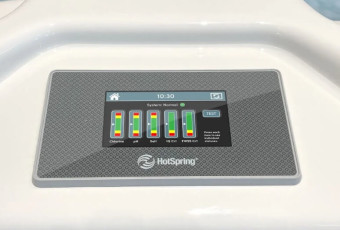
Keeping spa pool water soft, fresh and clear was once a laborious task full of litmus tests and carefully measured chemicals. But modern spa pool water care systems, such as Hot Spring’s FreshWater™ Salt and FreshWater® Ozone systems, are designed to largely automate this process, resulting in less work and more play!
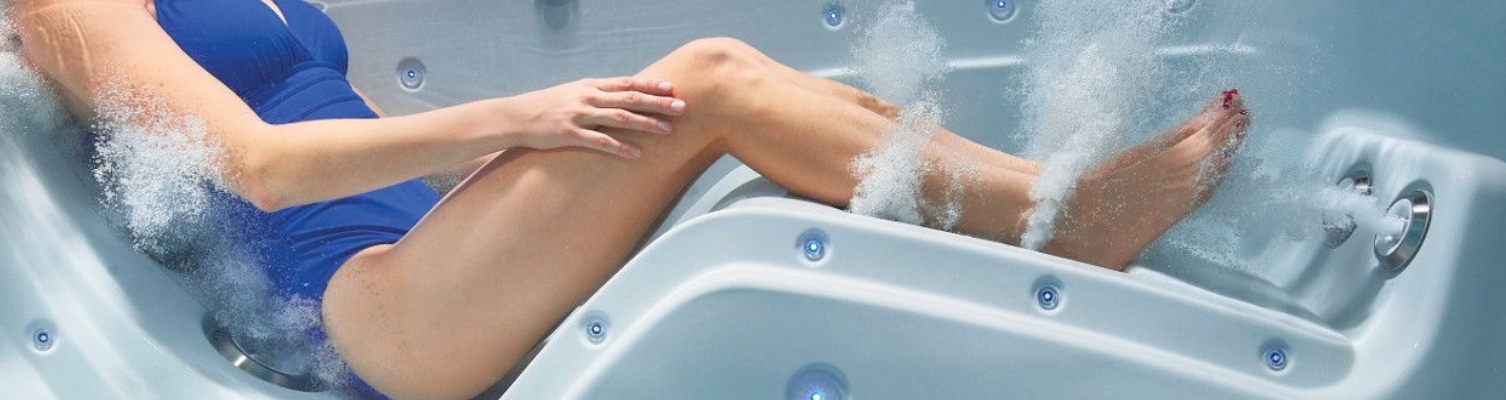
Adjustable jets
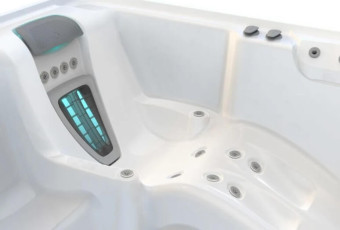
Entry-level spa pools tend to offer basic jets: a single size and design that doesn’t offer much in terms of movement or customisation. High-end spas, meanwhile, tend to offer a range of jets that can be pointed at problem areas or that may even move by themselves such as Moto Massage™, and that can be adjusted to your preferred pressure.
Lighting and water features
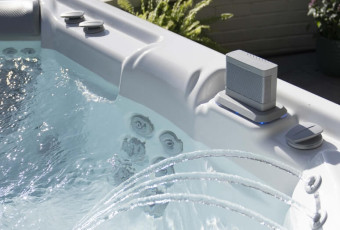
Your spa pool should be the showpiece of your backyard – something that adds to the look and feel of your outdoor area. It should also be a place where you can set whatever mood you like, from peaceful to party. A spa pool with built-in lighting systems and water features can do all that and more.
Entertainment systems
Another way to set the mood? With sights and sounds delivered through in-spa entertainment systems. From Bluetooth speakers to full audiovisual arrays, these additions can make your spa even more inviting, allowing you to pop on relaxing rainforest sounds, bop along to your favourite tunes or sit back and enjoy a movie and massage.
Key takeaways
- Insulation, a quality cover and efficient pumps have the biggest impact on running costs.
- Automated water care means less work, fewer chemicals and more time enjoying your spa.
- Features like Moto-Massage jets and lighting shape the day-to-day soaking experience.
Frequently asked questions on outdoor spa prices
What is the total cost of owning an outdoor spa over five years?
Over five years, budget for the spa, plus running costs, water, chemicals and occasional servicing. A well-insulated spa keeps these low, while a cheap one can cost more across five years than a premium model despite the lower sticker price.
Does an outdoor hot tub add value to your home?
A quality outdoor spa can add lifestyle appeal that helps a property stand out, though it is best seen as a wellness investment rather than a guaranteed resale return. A portable spa can also move house with you.
How much does it cost to run an outdoor spa?
Running costs depend mostly on insulation, your climate and how often you soak. An efficient, well-insulated Hot Spring spa pool can run from as little as $1 a day, while a poorly insulated one costs far more.
Are inflatable spas cheaper to run than hard-shell spas?
No. Inflatable spas are cheaper to buy but far more expensive to run, because their thin insulation loses heat quickly. A hard-shell spa costs more upfront but runs more efficiently.
When is the best time of year to buy an outdoor spa?
There is no single cheapest month, but end-of-season and winter sales, holiday promotions, and new-model release periods often bring the best deals. The bigger saving, though, is choosing an efficient, durable spa that costs less to run, rather than chasing a one-off discount. Keep an eye on our spa pool deals for current offers.
What is the true cost of owning an outdoor spa?
The true cost of an outdoor spa is far more than the sticker price: it includes power, water, chemicals, servicing and how long the spa lasts, which is why a cheap spa often costs more over time.
When you buy an outdoor spa, it's natural to focus on the sticker price. It's the number on the tag, the figure you compare between models, and the amount that leaves your bank account on day one. But here's the catch: that price represents just a portion of what your spa will actually cost you.
Think about everything that happens after the purchase. Your spa needs power to heat and run, water and chemicals to stay clean, and the occasional service or repair to keep performing. A poorly insulated, cheaply built spa quietly racks up costs on every one of these fronts, and because it isn't built to last, you may find yourself replacing it far sooner than you'd hoped. Those "savings" you enjoyed upfront have a habit of disappearing.
This is exactly the problem Hot Spring is built to solve. Our spa pools are engineered to use less power, demand less upkeep and last longer, so more of your money stays in your pocket over the years. As New Zealand's most energy-efficient spa brand, with running costs from as little as $1 a day and spare parts held for over 20 years, we design for the long haul, not just the day of sale. Get in touch with your local Hot Spring dealer and enquire about your next outdoor spa today.